Prices you can stand behind.

Pricing Management gives commercial and finance teams one governed place to set list prices, steer discounts and roll out changes across every region and channel.
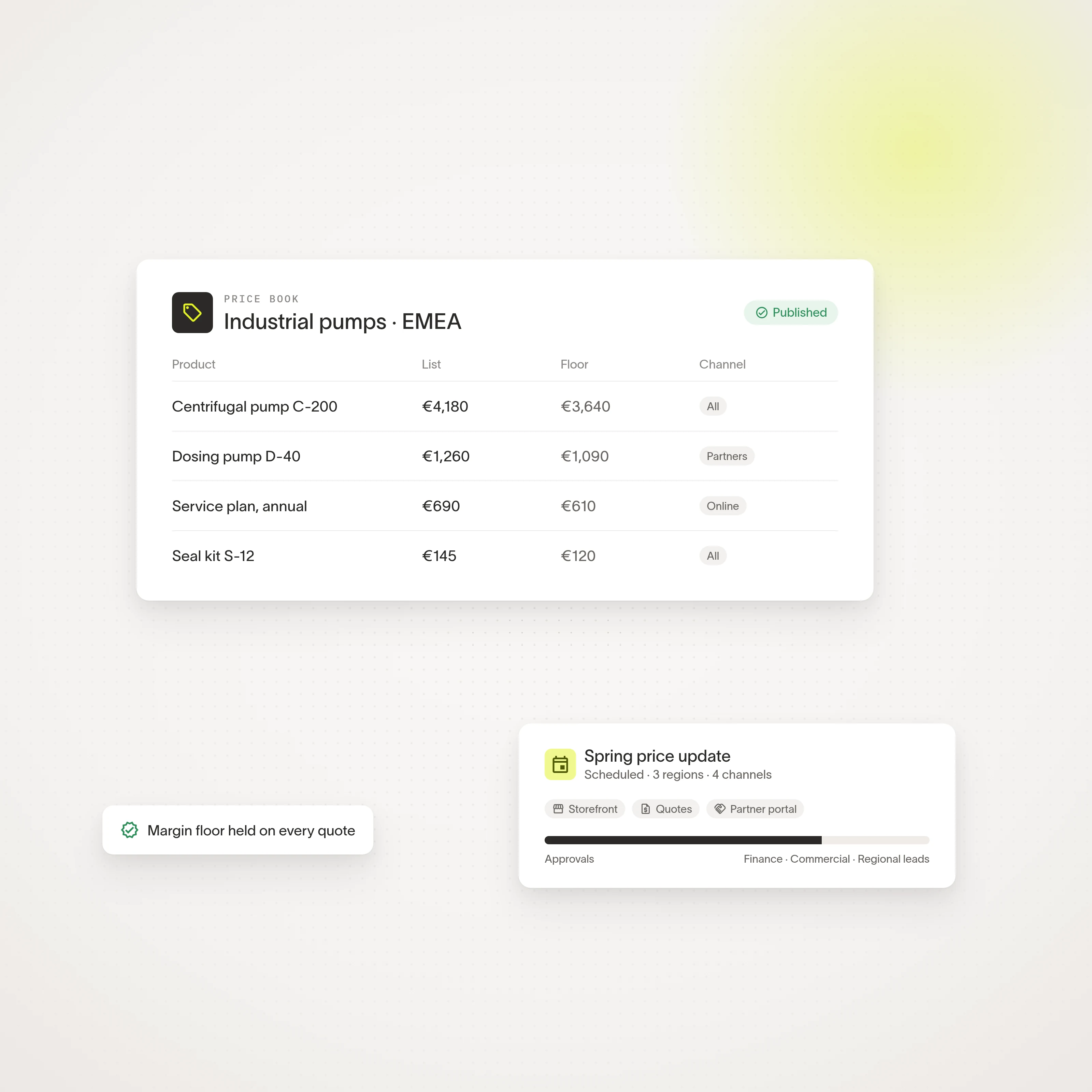

A OpsMonsters price book with list prices and floors, a scheduled price update and a margin check
Part of the OpsMonsters Commerce & Finance suite
Pricing Management
Data Governance
Pricing Management
Data Governance
Pricing Management
Data Governance
Pricing Management
Data Governance
Pricing Management
Data Governance

Why pricing drifts.

Prices live in too many places, and every change takes longer than it should.

Scattered price lists.
List prices, regional rates and customer agreements sit in spreadsheets, quoting tools and storefronts that rarely agree with one another.
Discounts without limits.
Reps negotiate deal by deal. Without clear floors and sign-off rules, small concessions pile up and nobody sees the total until the quarter has closed.
Slow price changes.
One cost increase can mean weeks of edits across products, regions and channels, with plenty of room for a wrong number to reach a customer.

The OpsMonsters approach.

One price book. Every list price, tier, currency and customer rate lives in a single governed record that quoting, commerce and billing all read from.

Guardrails built in. Set margin floors, discount bands and approval paths by product, region and deal size, so exceptions reach the right person before a quote goes out.

Changes that land. Plan an update, preview its effect on margin and revenue, then publish it to every channel on the date you pick.
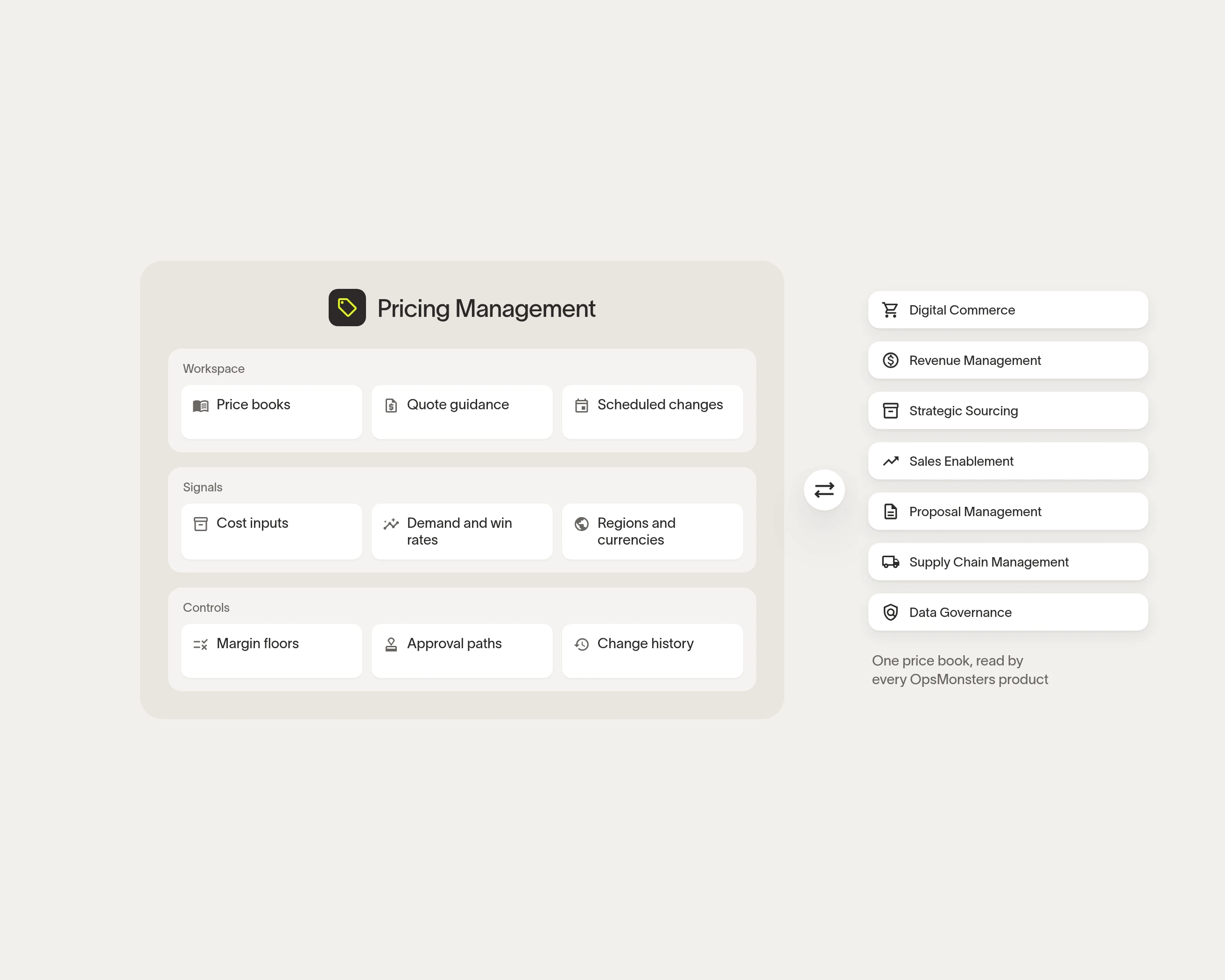
Pricing Management sharing one price book with other OpsMonsters products

Pricing in practice.

Four ways teams put Pricing Management to work.
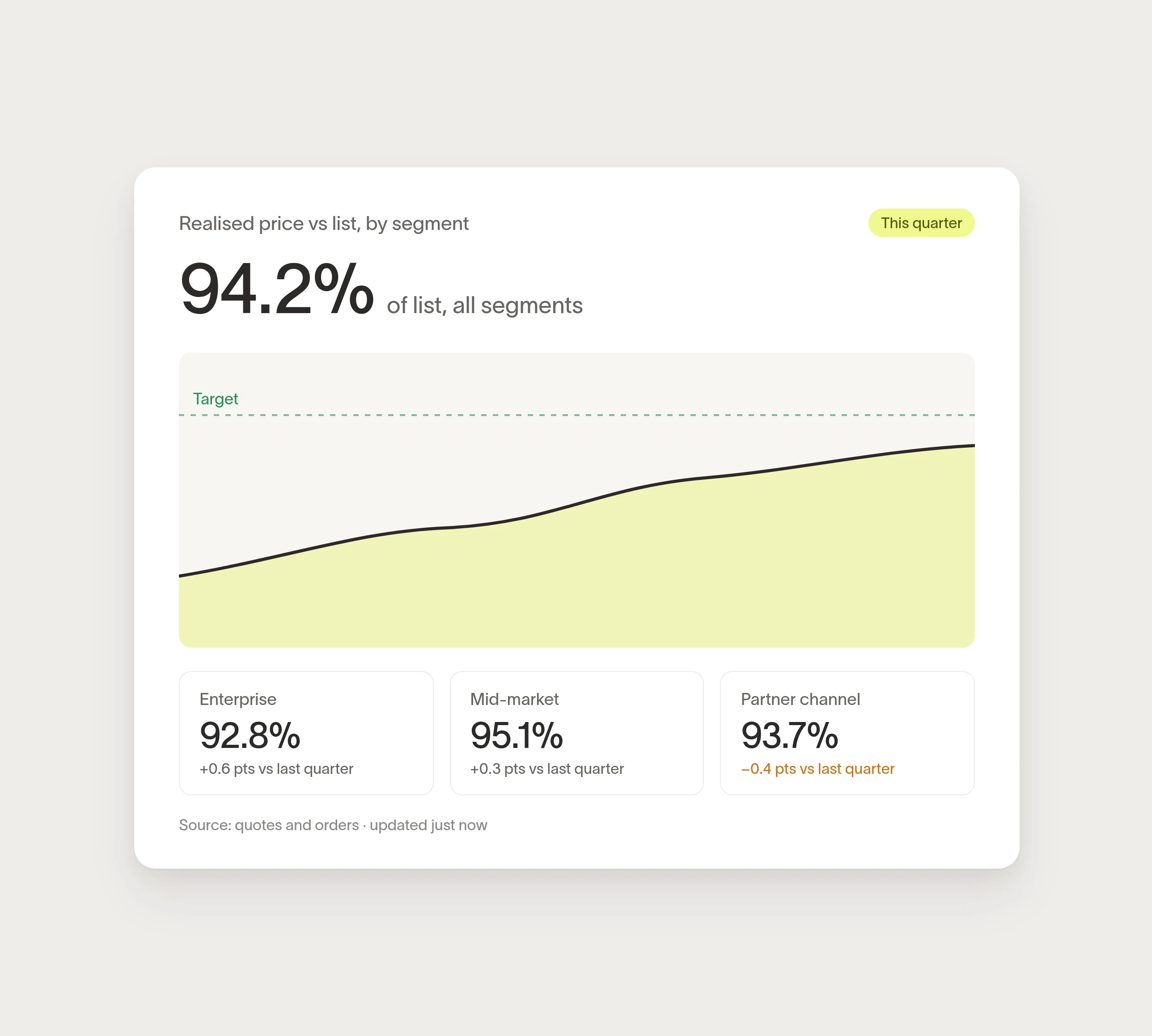
Realised price against list by customer segment

See realised price by segment as deals close
Track what customers actually pay against list for every product line and segment, so leaders catch discount creep while there is still time to act on it.
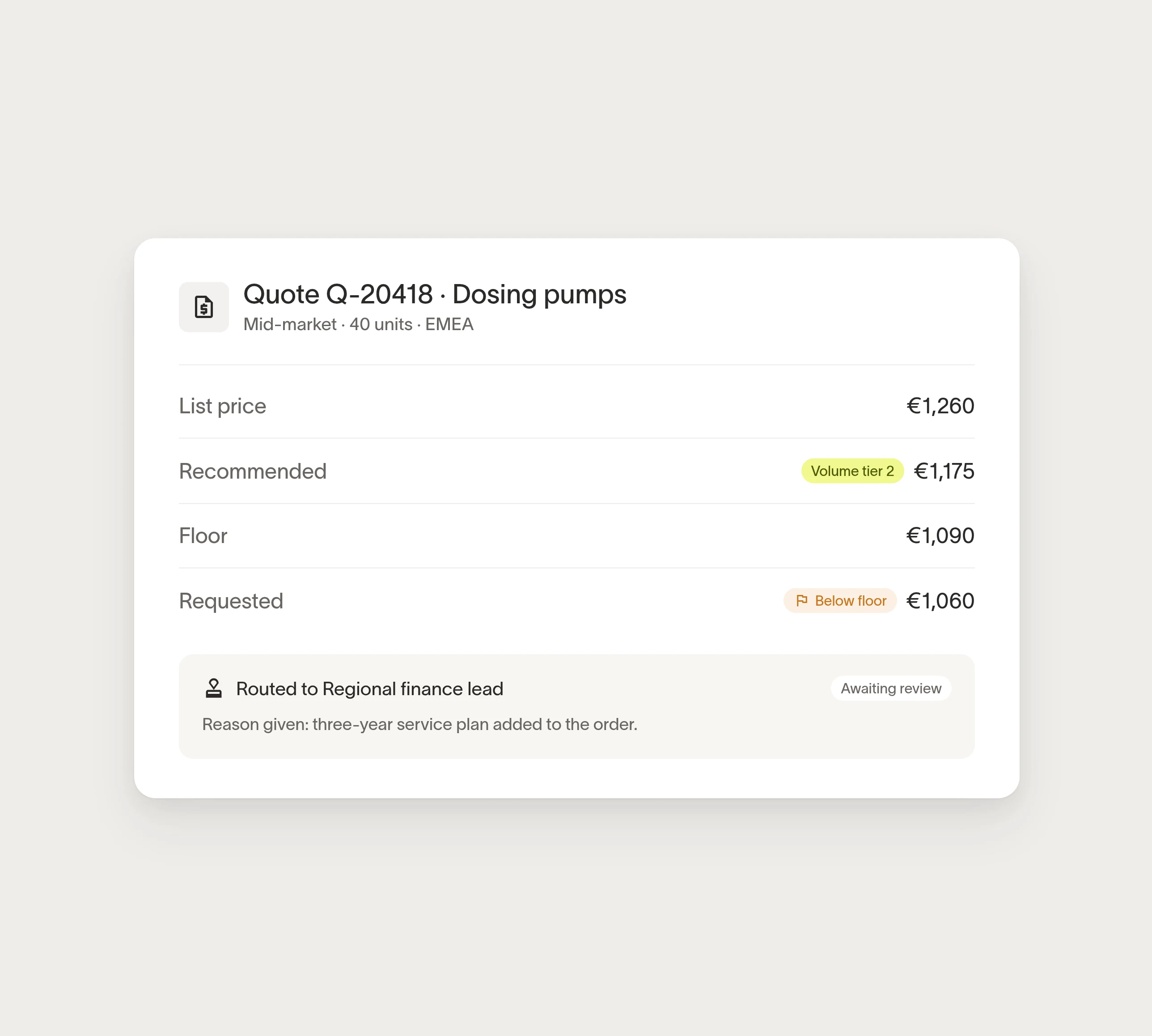
A quote below its price floor routed for approval

Guide every quote with clear limits

Reps see the recommended price, the floor and who signs off below it, right inside the quote. Each exception carries a reason, so reviews start from the facts.
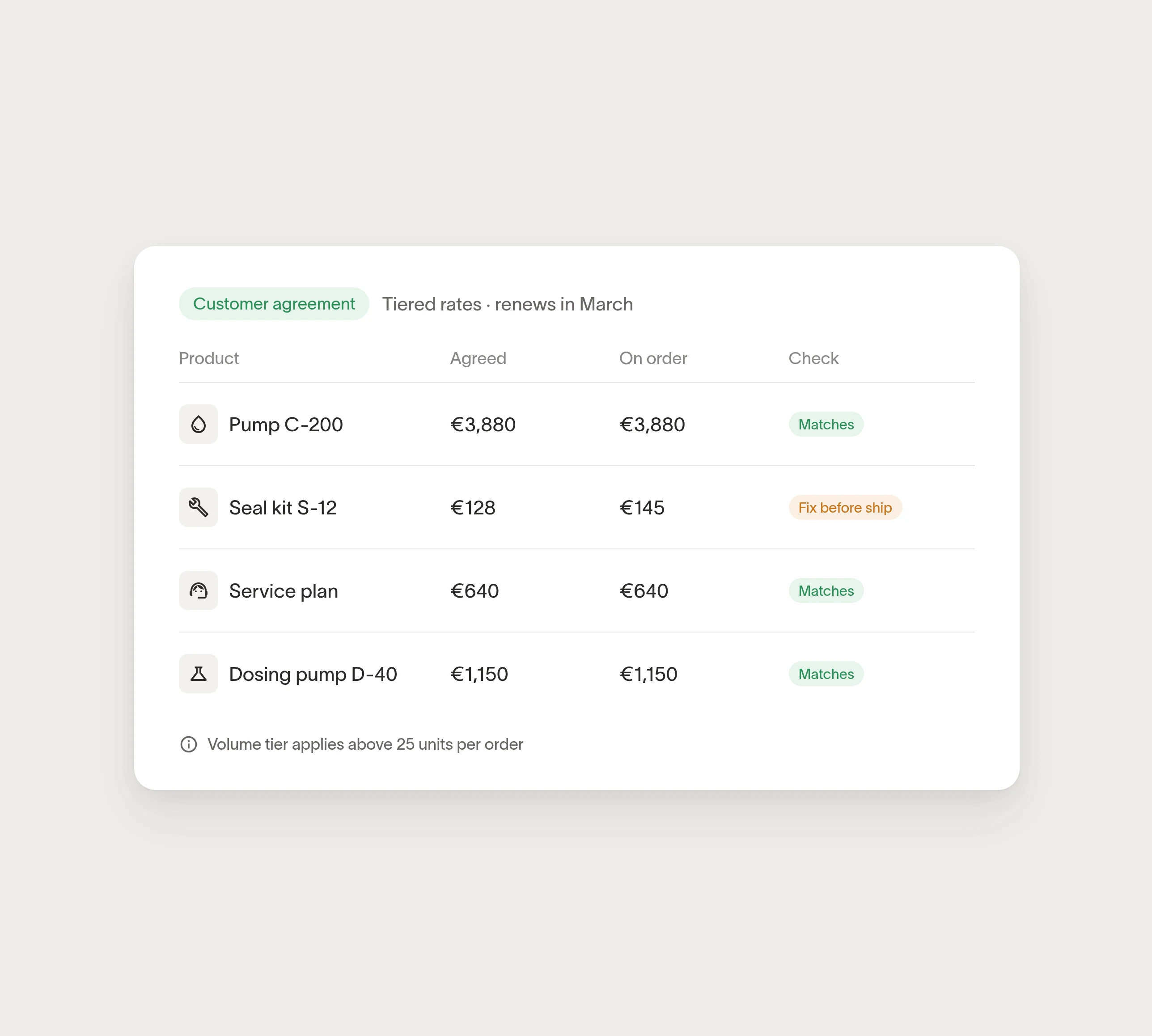
Order lines checked against a customer's agreed rates

Honour every negotiated rate on every order
Customer agreements carry tiers, caps and yearly escalators. Pricing Management keeps those terms with the account and checks each order against them before it ships.
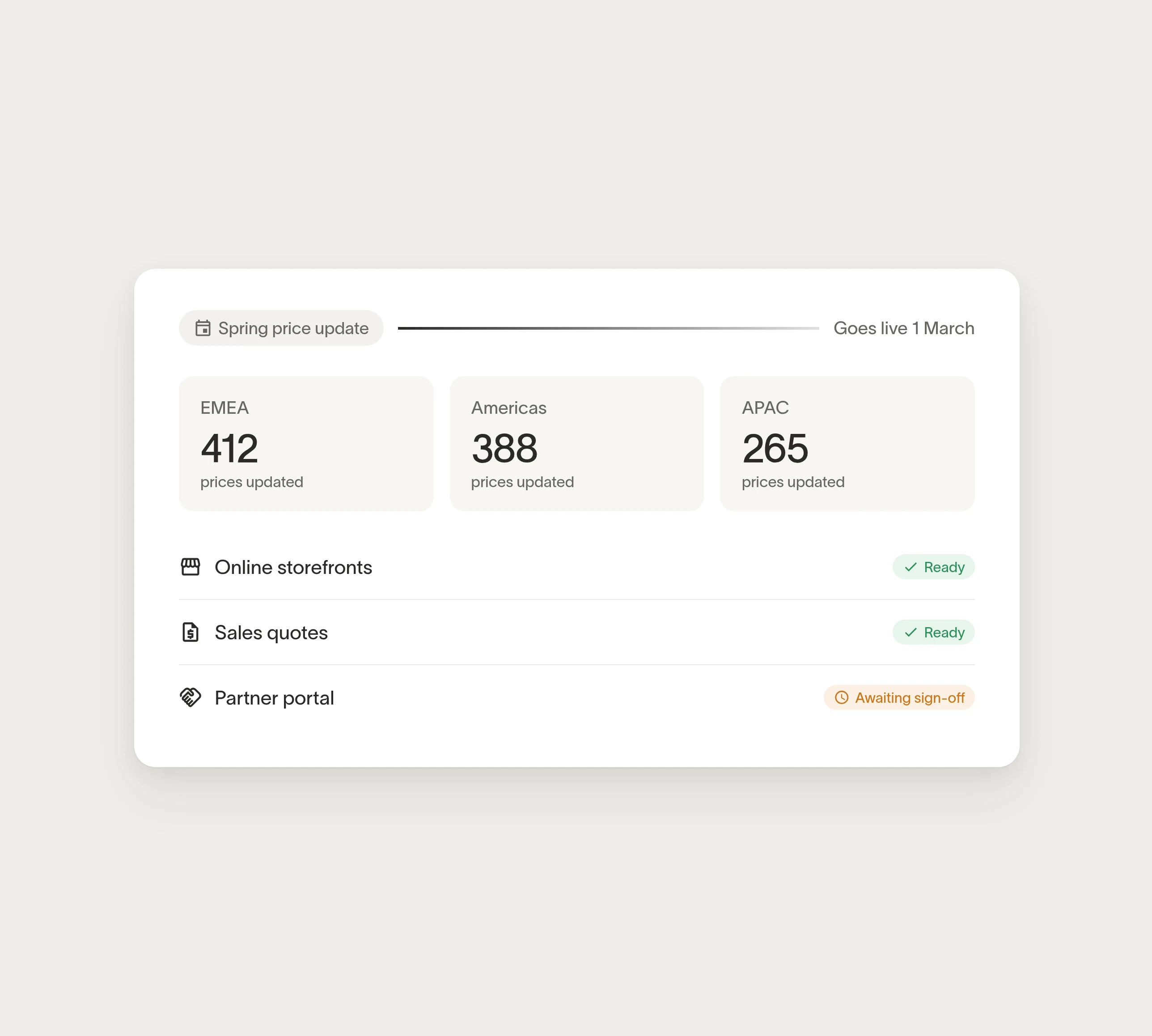
A scheduled price update ready for storefronts, quotes and the partner portal

Roll out a price change everywhere at once

Schedule an update once and it reaches every region, currency and channel together, so storefronts, partner portals and sales quotes switch over on the same day.

From first import to live pricing.

Start with the product lines that matter most, then extend to every region and channel at a pace that suits you.

1
Gather
Bring current price lists, discount habits and customer agreements into one place and see where they conflict.
2
Model
Set up price structures, margin floors and sign-off rules, then test them against recent deals before anything changes.
3
Launch
New prices go live in quoting and commerce channels at the same moment, with a clear record of what changed and why.
4
Refine
As costs, demand and competition shift, adjust the rules and publish updates without rebuilding anything.

Built for enterprise control.

Pricing Management runs on the same secure platform as the rest of OpsMonsters. See Digital Trust for how we protect your data.

Protected cost data.
Costs, margins and customer terms stay encrypted, and each customer's environment is kept apart from every other.
Access by role.
Decide who can view costs, who can edit prices and who approves exceptions, down to product line and region.
A complete change history.
Every price change, override and approval is recorded with who made it, when and why, ready for any review.

Questions about Pricing Management

Pricing Management is the OpsMonsters product for setting, governing and publishing prices. It keeps list prices, discount rules, customer agreements and planned changes in one place, and shares them with quoting, commerce and revenue planning across the platform.

Pricing and commercial teams own the price book. Sales teams use it while they quote, finance teams review margins and approve exceptions, and product and operations teams rely on it when they launch new items or enter new regions.

Pricing Management belongs to the Commerce & Finance suite, alongside Digital Commerce, Revenue Management and Strategic Sourcing. Storefronts read their prices from it, revenue plans use its scheduled changes, and a supplier cost change in Strategic Sourcing can open a price review. Sales Enablement and Proposal Management pull the same approved prices into quotes and proposals, so customers see one number wherever they look.

A spreadsheet holds numbers but not the rules around them. Pricing Management keeps prices, limits, sign-offs and history together, applies a change everywhere in one step and shows who changed what. Your team spends its time deciding prices instead of copying them.

A price book is the governed record of what you charge. It holds list prices by product, region, currency and channel, along with volume tiers, bundles and customer-specific rates. Each entry carries its effective dates, an owner and the rules that apply to it, such as a margin floor or a maximum discount. Quotes, storefronts and orders all read from the same book, so a change made once reaches every place it is used. Earlier versions are kept, which means you can always see what a customer was offered, when and why.

Pricing Management suits organisations with large catalogues, several regions or channels, or negotiated customer pricing, where keeping every price consistent by hand has stopped working. You do not need a tidy price list to begin; the first stage is about finding and settling the conflicts.

Most pricing work across a product's life. For example:
  • List prices by product, region, currency and channel
  • Volume tiers, bundles and subscription plans
  • Discount bands, margin floors and sign-off rules
  • Customer-specific agreements and renewal terms
  • Scheduled price changes and promotional periods
  • Cost-driven price reviews linked to Strategic Sourcing
  • Price history and an audit record for every change
Most teams begin with one product line and add the rest once their first price book is live.

No. Pricing Management connects to the quoting, commerce and billing tools you already run through the OpsMonsters integration hub, and it works natively with the other OpsMonsters products. Prices are published to those systems rather than retyped in each one.

Pricing Management runs in the OpsMonsters cloud, in an environment reserved for each customer and protected by encryption and network separation. Hosting regions depend on your plan and agreement.

  1. Gather: We collect your price lists, discount habits and customer agreements, show where they disagree and agree with you on which products move first.
  2. Model: Your team builds the price book structure, margin floors and sign-off rules with our specialists, and tests them against recent quotes and orders.
  3. Launch: Approved prices go live in quoting and commerce channels together. Price owners are trained, and the change history starts on the first day.
  4. Refine: We review results with you, extend coverage to more products and regions, and adjust the rules as costs and markets move.

It depends on the size of your catalogue, how many regions and channels you sell through, and how many systems need to receive prices. A single product line is the usual first step, and your OpsMonsters team sets out a plan after the first review.

Pricing Management reports realised price against list, discount depth, exception volume and approval times by product, region and team. You choose the measures that matter most at the start and review them at every stage.

Access is set by role. You decide who can view cost and margin data, who can edit prices and who approves exceptions. Every change is logged with its author, time and reason, and sensitive changes can require a second approver. Read more on Digital Trust.

Yes, as an adviser rather than a decision maker. It can suggest prices from cost, demand and win-rate signals and explain the factors behind each suggestion. People approve every change, and AI features follow the policies you set in OpsMonsters AI Governance.

You do. Price books, customer terms and change history remain yours and can be exported whenever you need them. OpsMonsters runs and secures the platform, and the details are set out in your agreement.

A pricing or commercial lead to own the price book, access to your current price lists and agreements, and someone from finance to agree margin rules. IT joins when it is time to connect quoting and commerce systems.

Your rollout is led by a OpsMonsters pricing specialist and a solution architect, with integration and data specialists joining as needed. The same people stay in touch after go-live.

Pricing Management is available on its own or as part of the Commerce & Finance suite. Licences depend on the number of users, catalogues and connected channels, and every plan includes onboarding support.

Pick the place where prices cause the most trouble today: Which product line or region would gain most from one trusted price book? OpsMonsters will review your current prices, rules and systems with you and suggest a first step.

Talk to our team

Tell us about your catalogue and we will be in touch.